Totem Town Community Garden
Friday, March 24, 2006
Raised Bed Learning Experience

While attending the Twin Cities Gardening Resource Fair on March 18, I ended up in a discussion on the "best design" for raised beds. A group of high school students and their moderator are getting ready to install some at various locations.
Besides the obvious questions of how high they should be, a gaggle of we community gardeners offered our opinions and experiences. We discussed materials, lengths, depths to turn soil below ground, aisle widths, fasteners, etc.
I was so intrigued that over the last week I reviewed my electronic and paper resources. I also worked up a little list of "starter questions" to ask when working through bed design and layout.
- What would the gardeners like?
- Is there some certainty of longevity for the garden?
- How will the garden be used?
- Does the sponsoring agency have a preference?
- Who will be using the space and what are their abilities?
- Is water more accessible using one method compared to another?
- Maintenance issues? What does the groundskeeper think?
- How does bed layout and their sizes fit the overall landscape?
- What will be grown? Example - with lots of verticals like beans and morning glories, a long narrow box with a trellis along a long end would have a wall-like effect. ¶ 8:47 PM 0 comments


While attending the Twin Cities Gardening Resource Fair on March 18, I ended up in a discussion on the "best design" for raised beds. A group of high school students and their moderator are getting ready to install some at various locations.
Besides the obvious questions of how high they should be, a gaggle of we community gardeners offered our opinions and experiences. We discussed materials, lengths, depths to turn soil below ground, aisle widths, fasteners, etc.
I was so intrigued that over the last week I reviewed my electronic and paper resources. I also worked up a little list of "starter questions" to ask when working through bed design and layout.
- What would the gardeners like?
- Is there some certainty of longevity for the garden?
- How will the garden be used?
- Does the sponsoring agency have a preference?
- Who will be using the space and what are their abilities?
- Is water more accessible using one method compared to another?
- Maintenance issues? What does the groundskeeper think?
- How does bed layout and their sizes fit the overall landscape?
- What will be grown? Example - with lots of verticals like beans and morning glories, a long narrow box with a trellis along a long end would have a wall-like effect. ¶ 8:47 PM 0 comments
Friday, March 17, 2006
Phosphorus - The Good and the Bad

According to gardening books, phosphorus is an essential nutrient. It is necessary for proper fruiting, flowering, seed formation, and root branching. It helps build strong stems and resistance to disease.
No wonder it is a basic fertilizer component. But excessive phosphorus is a signficant water quality issue In Minnesota.
Four recent sample analyses of soil from the TT community garden contained 61, 100+, 100+, and 54 parts per million phosphorus. The University of Minnesota indicates that 25 parts per million is considered very high.
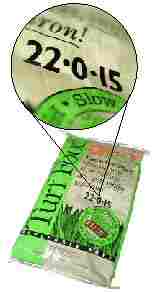
Bottom line. The garden does not need phosphorus. That is the easy part.
Now, we need to be convinced that any fertilzer that gets added should have zero as the middle number.
photo source - Minnesota Office of Environmental Assistance ¶ 8:21 PM 0 comments
According to gardening books, phosphorus is an essential nutrient. It is necessary for proper fruiting, flowering, seed formation, and root branching. It helps build strong stems and resistance to disease.
No wonder it is a basic fertilizer component. But excessive phosphorus is a signficant water quality issue In Minnesota.
Four recent sample analyses of soil from the TT community garden contained 61, 100+, 100+, and 54 parts per million phosphorus. The University of Minnesota indicates that 25 parts per million is considered very high.
Bottom line. The garden does not need phosphorus. That is the easy part.
Now, we need to be convinced that any fertilzer that gets added should have zero as the middle number.
photo source - Minnesota Office of Environmental Assistance ¶ 8:21 PM 0 comments
Friday, March 10, 2006
Victory Gardens - Some Facts

"Vegetables, Vitality, Victory" was the victory garden slogan for 1942.
Plot sizes of 20 by 40 feet, 30 by 50 feet were deemed sufficient to feed a family of four.
Tomatoes. beets, beans, carrots, radishes, Swiss chard, and onions were the recommended crops. Brussel sprouts were banned from the recommended list.
In 1942 fifteen million victory gardens were registered with the USDA. Twenty million were registered the next year.
There were victory gardens on the Boston Common and at Arlington Park racetrack in Chicago. Gardens were commonplace in public parks.
source: The North Dakota Quarterly, Summer 1993 ¶ 9:07 PM 0 comments

"Vegetables, Vitality, Victory" was the victory garden slogan for 1942.
Plot sizes of 20 by 40 feet, 30 by 50 feet were deemed sufficient to feed a family of four.
Tomatoes. beets, beans, carrots, radishes, Swiss chard, and onions were the recommended crops. Brussel sprouts were banned from the recommended list.
In 1942 fifteen million victory gardens were registered with the USDA. Twenty million were registered the next year.
There were victory gardens on the Boston Common and at Arlington Park racetrack in Chicago. Gardens were commonplace in public parks.
source: The North Dakota Quarterly, Summer 1993 ¶ 9:07 PM 0 comments
Friday, March 03, 2006
Viewing Gardens From Above

No it's not a photo of long abandoned Mayan village or an ancient walled town in the Middle East. It is an aerial photograph showing the Totem Town Community Garden in the early 2000's. Saint Paul's public works department, like most cities, periodically snaps Kodaks of its environs.
Another perspective on things is always a good idea and this photo provides it.
The white strips are carpeting we put down to control weeds. Garden plots that look almost like rice paddies and the deceptive late winter brown color looks abandoned and desolate. Look closer and catch the green glimpses of spring, just around the corner.
A personal favorite garden photo of mine is another aerial photogrpah. It appears in the wonderful, photo-rich book, The Earth From Above.
The photo is entitled "Market Gardening in the Vicinity of Timbuktu, Mali (N10 48', W 3 04')". You can see the photo at http://www.yannarthusbertrand.com/. From the dropdown menu chose Mali and then find the thumbnail, first row, second photo. It's one of those images that makes you want to find your way to that man's latitude and longitude, walk the dusty brown garden pathways, and appreciate the green squares of food that are being grown.
However you see them, gardens are great. ¶ 8:42 PM 0 comments

No it's not a photo of long abandoned Mayan village or an ancient walled town in the Middle East. It is an aerial photograph showing the Totem Town Community Garden in the early 2000's. Saint Paul's public works department, like most cities, periodically snaps Kodaks of its environs.
Another perspective on things is always a good idea and this photo provides it.
The white strips are carpeting we put down to control weeds. Garden plots that look almost like rice paddies and the deceptive late winter brown color looks abandoned and desolate. Look closer and catch the green glimpses of spring, just around the corner.
A personal favorite garden photo of mine is another aerial photogrpah. It appears in the wonderful, photo-rich book, The Earth From Above.
The photo is entitled "Market Gardening in the Vicinity of Timbuktu, Mali (N10 48', W 3 04')". You can see the photo at http://www.yannarthusbertrand.com/. From the dropdown menu chose Mali and then find the thumbnail, first row, second photo. It's one of those images that makes you want to find your way to that man's latitude and longitude, walk the dusty brown garden pathways, and appreciate the green squares of food that are being grown.
However you see them, gardens are great. ¶ 8:42 PM 0 comments
